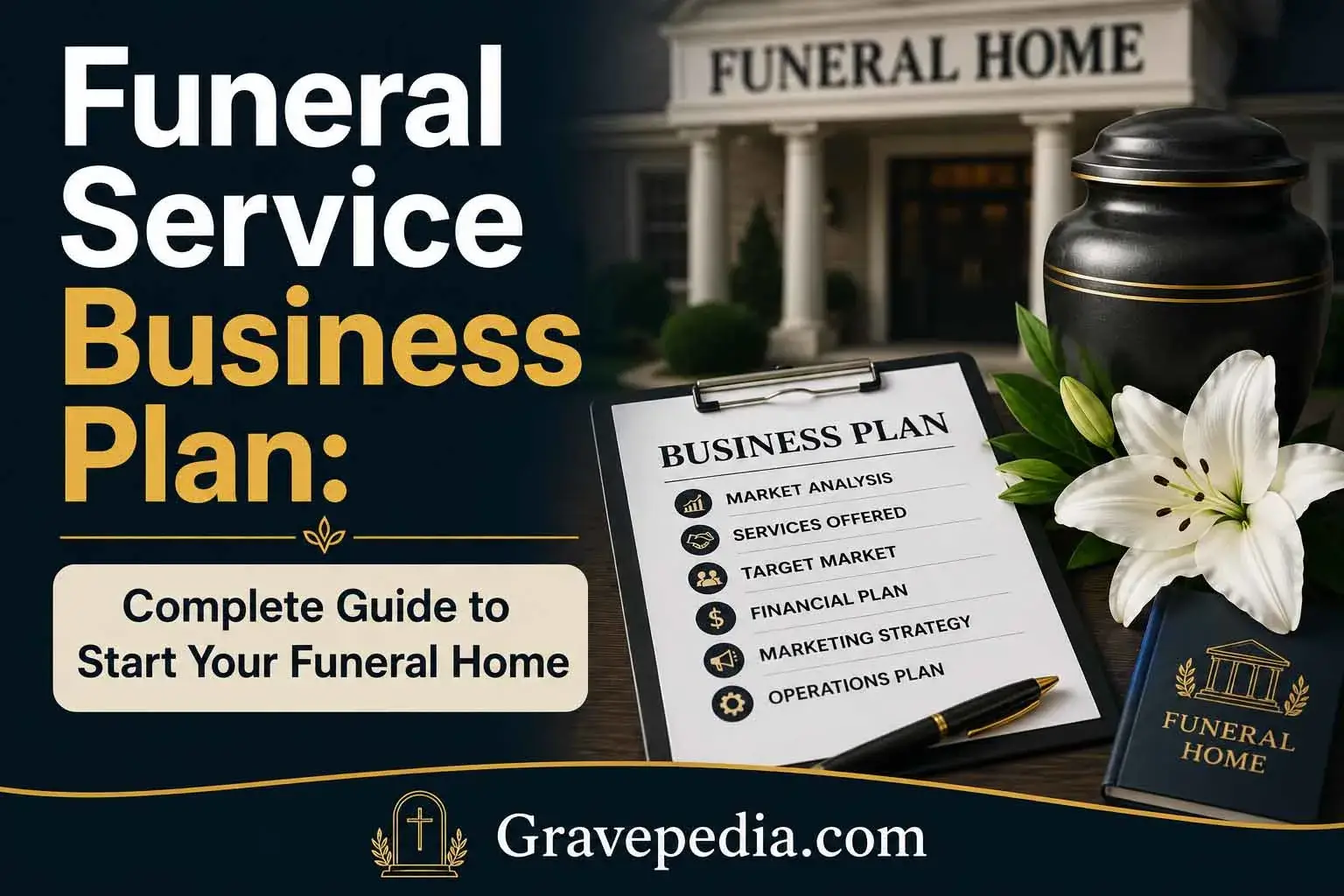
Funeral Service Business Plan: Complete Guide to Start Your Funeral Home 2026
Average startup cost: $150,000 – $500,000+ (full-service funeral home)
Time to launch: 6 – 24 months (including licensing and apprenticeship)
Expected profit margin: 10 – 20% after establishment
Industry growth rate: 3 – 5% annually
Average revenue: $500,000 – $2,000,000 per year
Funeral Service Business Plan: Executive Summary
A funeral service business plan is your roadmap to starting and operating a successful funeral home, crematory, or memorial service company. The funeral industry generates over $20 billion annually in the United States, with steady demand regardless of economic conditions. Passing is certain, making this one of the most recession-proof business opportunities available. However, the industry is evolving rapidly. Cremation rates now exceed 60%, changing how funeral service businesses operate. Your funeral service business plan must address this shift while honoring traditional funeral service values. This comprehensive guide walks you through every component of a funeral service business plan, from market analysis to financial projections.
Did you know? The average funeral home serves approximately 100-200 families per year. With an average sale of $7,000-$10,000 per traditional funeral, annual revenue can reach $700,000 to $2,000,000.
Market Analysis for Funeral Home Business
Before writing your funeral service business plan, understand the market. The US passing rate is approximately 8-9 deaths per 1,000 population annually, creating consistent demand. Key trends shaping the funeral industry in 2026 include:
- Cremation control: Cremation rate exceeds 60% and continues rising. Your funeral home business plan must include cremation services or risk losing market share.
- Pre-need planning growth: More families are pre-planning funerals. Funeral homes with strong pre-need programs capture future business.
- Personalization demand: Families want unique, personalized services reflecting the deceased's life, not generic ceremonies.
- Green burial interest: Eco-conscious consumers seek natural burial options without embalming or vaults.
- Price transparency: FTC Funeral Rule requires itemized pricing; consumers compare prices online before choosing a funeral home.
Competitive Analysis for Funeral Business Plan
Your funeral service business plan must analyze local competition. Identify all funeral homes within a 10-15 mile radius. Document their pricing (published online or obtained via GPL requests), service offerings, online reviews, and reputation. Look for gaps in the market. Does your area lack affordable direct cremation? Is there no green burial provider? Are families complaining about unresponsive service or outdated facilities? These gaps represent opportunities for your funeral service business.
Services Offered in Funeral Business Plan
Your funeral service business plan must clearly define your service offerings. Most successful funeral homes offer tiered packages to serve different budgets and preferences:
Traditional Funeral Services
Complete service including removal of remains, embalming, dressing/casketing, visitation/viewing (typically 2-4 hours), funeral ceremony, hearse transportation, and graveside committal service. Average price: $6,500-$10,500. This remains the most comprehensive option for families choosing burial.
Cremation Services
With cremation rates above 60%, your funeral service business plan must prioritize cremation offerings. Options include direct cremation (no service, $800-$2,500), cremation with memorial service ($3,500-$7,000), and cremation with traditional visitation before cremation ($4,000-$8,000). Many funeral homes now operate their own crematory to control quality and maximize profit margins.
Green / Natural Burial Services
Eco-conscious families seek biodegradable caskets or shrouds, no embalming chemicals, and burial in natural or conservation cemeteries. Green funerals typically cost $3,000-$6,000, appealing to environmentally aware consumers and those seeking simpler, more affordable options.
Pre-Need Funeral Planning
Pre-need arrangements allow families to plan and pre-pay for funerals in advance. This service builds future revenue, locks in clients before competitors, and provides steady cash flow. Your funeral service business plan should include pre-need sales training and compliance with state pre-need trust laws.
Memorial Merchandise
Caskets ($1,000-$10,000+), urns ($100-$1,000), memorial folders, prayer cards, register books, and online tributes. Merchandise sales typically represent 30-40% of funeral home revenue. Your funeral service business plan should include supplier relationships and display strategies.
Industry Insight: Funeral homes typically mark up caskets 200-400% over wholesale cost. This is a significant profit center. The FTC Funeral Rule requires funeral homes to accept caskets purchased from third-party sellers (like Costco or Walmart) without additional fees.
Funeral Service Business License & Permits
Licensing is the most complex and time-consuming part of any funeral service business plan. Requirements vary by state but generally include:
- Funeral Director License: Requires mortuary science degree (accredited program, typically 2 years), apprenticeship/internship (1-2 years under licensed director), and passing state board examination. Total time: 3-4 years.
- Embalmer License: Additional training and certification beyond funeral director license. Some states require both licenses to operate a funeral home.
- Funeral Establishment License: Facility must meet state requirements for preparation room, equipment, and sanitation. Annual inspections required.
- Crematory Permit: If offering cremation, requires EPA compliance, air quality permits, and specialized equipment. Crematory operators need additional certification.
- Business License & Tax Registration: Standard business licenses, sales tax permit, and employer identification number (EIN).
Your funeral service business plan should include a timeline for completing all licensing requirements before opening. Some states allow provisional operation while licensing is pending; others require full licensure before serving any families.
Do you need a license to open a funeral home?
Yes, you need a license to open a funeral home. Every state requires funeral director licensure, and most require the funeral establishment itself to be licensed. Requirements include formal education (mortuary science degree), apprenticeship, and passing a state board exam. Some states also require an embalmer license. Without proper licensing, you cannot legally operate a funeral home. Your funeral service business plan must account for the time and cost of obtaining all necessary licenses.
Funeral Home Startup Costs Breakdown
A realistic financial plan is the backbone of any funeral service business plan. Below is a detailed breakdown of funeral home startup costs in 2026:
| Expense Category | Low Range | High Range | Average |
|---|---|---|---|
| Facility purchase or lease | $100,000 | $500,000+ | $250,000 |
| Renovation & furnishings | $50,000 | $200,000 | $100,000 |
| Hearse & vehicles (2-3 vehicles) | $50,000 | $150,000 | $80,000 |
| Crematory equipment (optional) | $30,000 | $100,000 | $60,000 |
| Initial casket & urn inventory | $20,000 | $50,000 | $30,000 |
| Licensing, permits, legal fees | $5,000 | $15,000 | $10,000 |
| Marketing & website development | $5,000 | $20,000 | $10,000 |
| Working capital (6 months expenses) | $50,000 | $100,000 | $75,000 |
| Total Estimated Startup Cost | $310,000 | $1,135,000+ | $615,000 |
Cremation-only businesses can start with significantly lower investment: $100,000-$250,000 total, focusing on crematory equipment, smaller facility, and fewer vehicles. Your funeral service business plan should match your investment capacity and market opportunity.
Funeral home cost breakdown – detailed analysis
Understanding the funeral home cost breakdown is essential for accurate planning. Beyond the major categories above, consider ongoing costs: staff salaries (40-50% of revenue), facility maintenance (5-8%), vehicle maintenance and fuel (3-5%), insurance (2-4%), marketing (3-5%), and administrative expenses (2-3%). First-year operations often require additional capital beyond startup costs. A detailed cost breakdown should be a key section of your funeral service business plan, helping you avoid underestimating capital needs.
Funeral Business Financial Plan & Projections
Your funeral service business plan must include realistic financial projections for 3-5 years. Key assumptions to document include:
- Average cases per year: New funeral homes typically serve 50-100 families in year one, growing to 150-250 by year five.
- Average revenue per case: $5,000-$8,000 depending on service mix (traditional burial vs cremation).
- Gross profit margin: 35-45% on services, 50-60% on merchandise (caskets, urns).
- Operating expenses: Staff salaries (40-50% of revenue), facility costs (10-15%), vehicles and maintenance (5-10%), marketing (3-5%), insurance (2-4%).
- Net profit margin: 10-20% after all expenses.
Sample Year 1 Projection (100 cases at $6,000 average): Revenue $600,000. Staff costs $250,000, facility $60,000, vehicles $30,000, merchandise cost $150,000, marketing $20,000, other expenses $40,000. Net profit $50,000 (8.3% margin). Year 3-5 margins typically improve to 15%+ as reputation grows.
Funeral home small business financial benchmarks
Industry benchmarks help you evaluate your funeral home's performance. Key metrics include:
- Revenue per case: $5,000-$8,000 (average $6,500)
- Cases per location: 100-200 annually for established homes
- Gross margin: 35-45% on services; 50-60% on merchandise
- Net profit margin: 10-20% for established homes
- Staff cost ratio: 40-50% of revenue
- Marketing spend: 3-5% of revenue
- Pre-need sales: 20-30% of total case volume for mature businesses
Benchmark your funeral home against these figures to identify areas for improvement. Your funeral service business plan should include benchmark comparisons.
Funeral Home Revenue, Profit & Owner Earnings
How much does a funeral home make a year?
Funeral home annual revenue ranges from $500,000 to $2,000,000 for a typical independent funeral home. Revenue depends on case volume, average sale per case, and service mix. A home serving 100 cases at $6,000 average generates $600,000; 200 cases at $8,000 average generates $1,600,000. Your funeral service business plan should project revenue based on realistic case volume assumptions for your market.
How much does a funeral home make a month?
Monthly revenue for a funeral home serving 100 cases per year averages approximately $50,000. However, revenue fluctuates seasonally—passing rates often increase in winter months. A funeral home with $600,000 annual revenue might see $40,000-$60,000 monthly. After operating expenses, net profit might be $4,000-$8,000 monthly for a newer business, growing as the business matures. Your funeral service business plan should include monthly cash flow projections to manage seasonal variations.
How much do funeral home owners make? (Owning a funeral home salary)
Funeral home owner salaries range from $50,000 to $150,000+ annually, depending on location, business size, and profitability. Owners of established, high-volume funeral homes can earn significantly more through profit distributions. Some owners take a modest salary and reinvest profits; others draw higher salaries. The Bureau of Labor Statistics reports median annual wages for funeral home managers around $70,000-$80,000, but owner-operators often earn more. Your funeral service business plan should include owner compensation as part of the financial projections.
How much profit does a funeral home make per funeral?
Net profit per funeral typically ranges from $500 to $2,000. Traditional funerals with higher merchandise sales yield greater profit per case; direct cremations yield less. After accounting for staff time, facility costs, vehicle use, merchandise cost, and overhead, the net profit per case often falls in the $500-$1,500 range for an established funeral home. Your funeral service business plan should include per-case profitability analysis.
Funeral home business profit margins
Funeral home profit margins are a key indicator of business health. Gross profit margins typically range from 35-45% on services and 50-60% on merchandise. Net profit margins for established funeral homes generally range from 10-20%. New funeral homes may operate at lower margins or at a loss during the first 1-3 years as they build reputation and case volume. Factors affecting profit margins include:
- Service mix: Traditional funerals have higher margins than direct cremations.
- Merchandise sales: Casket and urn sales significantly boost margins.
- Operational efficiency: Staff scheduling, vehicle routing, and inventory management affect costs.
- Market competition: Pricing pressure in competitive markets reduces margins.
- Pre-need programs: Pre-need sales provide predictable future revenue and improve margins.
Your funeral service business plan should include strategies to achieve and maintain healthy profit margins.
Funeral home business profitability
Funeral home business profitability is generally strong due to consistent demand and the essential nature of services. The industry is recession-resistant—passing rates remain stable regardless of economic conditions. However, profitability varies based on management, market conditions, and adaptation to trends. Key profitability drivers include:
- Effective pre-need sales programs
- Operational efficiency and cost control
- Strategic pricing and service mix
- Strong community relationships and reputation
- Adaptation to cremation trends
- Diversified revenue streams (merchandise, cremation, aftercare)
Are funeral homes profitable? / Is owning a funeral home profitable?
Yes, funeral homes are profitable. Established funeral homes typically achieve 10-20% net profit margins. The industry benefits from stable demand, recurring revenue (pre-need), and strong pricing power. However, new funeral homes may take 2-5 years to become profitable due to startup costs, licensing timelines, and the time required to build reputation and case volume. Owning a funeral home can be very profitable for those who successfully navigate licensing, operations, and market competition. Your funeral service business plan should include a realistic profitability timeline and breakeven analysis.
What is the profit margin for a funeral home?
The profit margin for a funeral home varies by size, location, and service mix. Gross profit margins are typically 35-45% on services and 50-60% on merchandise. Net profit margins for established funeral homes generally range from 10-20%. The average net profit margin across the industry is approximately 12-15%. Your funeral service business plan should target these benchmarks while accounting for local market conditions.
How profitable are funeral homes? – Industry data
Industry data shows funeral homes are consistently profitable. According to financial surveys, the average funeral home generates $500,000-$2,000,000 in annual revenue with 10-20% net profit margins. The most profitable funeral homes achieve 20%+ margins through operational efficiency, strong pre-need programs, and diversified services. Profitability is enhanced by:
- Owning rather than leasing facilities (builds equity)
- Operating an on-site crematory (higher margins)
- Strong merchandise sales (caskets, urns, memorial items)
- Pre-need sales (predictable revenue, reduced marketing costs)
- Multiple locations (economies of scale)
What makes funeral service a good investment?
Funeral service is considered a good investment because:
- Recession-proof demand: Passing is certain; demand remains stable regardless of economic cycles.
- Recurring revenue: Pre-need programs provide predictable future income.
- High barriers to entry: Licensing requirements limit competition.
- Essential service: Families must use funeral services; demand is inelastic.
- Strong margins: Gross margins of 35-60% and net margins of 10-20%.
- Growth potential: Aging population increases demand over time.
- Equity building: Real estate and business equity appreciate.
Your funeral service business plan should articulate these investment advantages when seeking funding.
Marketing Strategy for Funeral Service Business
Marketing a funeral home requires sensitivity and professionalism. Your funeral service business plan should include these marketing channels:
- Pre-need marketing: Educational seminars at senior centers, direct mail to age 55+ households, partnerships with elder law attorneys and financial planners.
- Digital presence: Funeral planning website with pricing transparency, Google Business Profile optimization for "funeral home near me" searches, online obituaries with sharing options.
- Community relationships: Partner with hospitals, hospice organizations, nursing homes, churches, synagogues, and mosques. Provide free grief resources and educational materials.
- Reputation management: Online reviews on Google and Yelp are critical. Most families choose funeral homes based on reviews and recommendations. Ask satisfied families to leave reviews.
- Aftercare programs: Offer grief support groups, memorial events (holiday remembrance, candle lighting), and annual family gatherings to maintain relationships.
Funeral home marketing plan – detailed strategies
A comprehensive funeral home marketing plan should include:
- Website and SEO: Mobile-friendly website with service pages, pricing information, obituary listings, and online pre-planning tools. Optimize for local search terms like "funeral home [city]" and "cremation services near me."
- Google Business Profile: Complete profile with photos, hours, services, and regular posts. Encourage reviews and respond professionally.
- Content marketing: Blog articles on funeral planning, grief support, pre-need options, and end-of-life topics. This builds trust and improves search rankings.
- Social media: Facebook page for obituaries, community announcements, and grief resources. Instagram for facility photos and memorial ideas.
- Direct mail: Targeted mailings to households with residents aged 55+ promoting pre-need planning.
- Community events: Host educational seminars, grief support groups, and memorial services for community members.
- Referral programs: Build relationships with hospice, hospitals, nursing homes, clergy, and senior centers.
- Pre-need sales: Dedicated pre-need counselors, insurance-funded pre-need contracts, and payment plans.
Your funeral service business plan should include a marketing budget (3-5% of revenue) and detailed tactics for each channel.
How to get more funeral business?
To get more funeral business, focus on:
- Exceed service expectations: Word-of-mouth referrals are the most powerful marketing. Provide exceptional, compassionate service.
- Strengthen pre-need programs: Pre-need clients become future business and reduce marketing costs.
- Build community relationships: Partner with hospitals, hospice, nursing homes, and religious organizations.
- Improve online presence: Optimize your website for local search, collect positive reviews, and post regular content.
- Offer competitive pricing: Price transparency and affordable options attract families comparing prices.
- Expand service offerings: Add cremation, green burial, or memorial products to serve more families.
- Aftercare programs: Grief support groups and memorial events keep your funeral home top-of-mind.
How to grow a funeral business?
Growing a funeral business requires strategic planning and consistent legal action. Growth strategies include:
- Increase case volume: Through marketing, referrals, and pre-need sales.
- Increase average sale per case: Through merchandise sales, service upgrades, and personalized options.
- Expand geographic reach: Open additional locations or serve neighboring communities.
- Diversify services: Add cremation, green burial, pet cremation, or memorial products.
- Acquire competitors: Purchase existing funeral homes to grow market share.
- Improve operational efficiency: Reduce costs through better scheduling, inventory management, and staff training.
- Invest in marketing: Digital marketing, community outreach, and pre-need campaigns drive growth.
Your funeral service business plan should include a growth strategy section outlining these approaches.
What makes a funeral home successful? / How to have a successful funeral home?
Successful funeral homes share these characteristics:
- Compassionate service: Families remember how you made them feel. Exceptional care generates referrals.
- Transparent pricing: The FTC Funeral Rule requires itemized pricing; transparent pricing builds trust.
- Community engagement: Active involvement in local organizations, churches, and events.
- Strong pre-need program: Pre-need sales provide predictable revenue and future clients.
- Modern facilities: Clean, welcoming, and well-maintained visitation and ceremony spaces.
- Digital presence: Professional website, positive online reviews, and active social media.
- Adaptation to trends: Offering cremation, green burial, and personalized services.
- Staff training and retention: Licensed, compassionate staff who provide consistent service.
- Financial management: Cost control, pricing strategy, and reinvestment in the business.
Your funeral service business plan should incorporate these success factors.
Target market for funeral services
The target market for funeral services includes:
- Pre-need planners: Grown-ups aged 45-75, often married, with disposable income, planning ahead for themselves or aging parents.
- At-need families: Grown-up children (35-65) making arrangements for a deceased parent or relative.
- Senior citizens: Individuals aged 65+ who are more likely to pre-plan and have traditional preferences.
- Religious and cultural groups: Different faiths and cultures have specific funeral customs requiring specialized outreach.
- Veterans: Eligible for burial benefits at national cemeteries; funeral homes often specialize in veterans' services.
- Eco-conscious consumers: Individuals seeking green burial and environmentally friendly options.
Your funeral service business plan should define your target market and tailor services and marketing accordingly.
Funeral Service Business Risks & Challenges
Every funeral service business plan should acknowledge potential risks. The funeral industry faces several challenges in 2026:
- Cremation rate increases: Cremation generates lower revenue per case than traditional burial (approximately 40-50% less). Your business model must adapt.
- Corporate competition: Large corporate providers (SCI, Carriage Services) have economies of scale and marketing budgets. Independent funeral homes compete on personal service, community relationships, and pricing.
- Staffing challenges: Licensed funeral directors and embalmers are in short supply. Recruiting and retaining qualified staff is difficult. Your funeral service business plan should include competitive compensation and training programs.
- Regulatory burden: FTC Funeral Rule compliance, state licensing requirements, and EPA crematory regulations create administrative overhead.
- On-call demands: Funeral homes operate 24/7/365. Burnout is common. Plan for adequate staffing and self-care.
Funeral Home Business for Sale, Franchise & Investment
Funeral home business for sale – what to consider
When buying a funeral home business for sale, evaluate:
- Financial statements: Review 3-5 years of profit and loss statements, balance sheets, and tax returns. Verify revenue, case volume, and profit margins.
- Case volume trends: Is the number of families served increasing, stable, or declining? Check market demographics.
- Market competition: Assess local competitors, their pricing, and market share.
- Facility condition: Inspect the building, equipment, vehicles, and inventory. Estimate renovation or replacement costs.
- Staff retention: Will key licensed staff stay after the sale? Staff transitions can disrupt operations.
- Pre-need liabilities: Understand pre-need contract obligations and trust fund status.
- Licensing transferability: Verify that licenses can be transferred to you or that you can obtain required licenses.
- Valuation: Funeral homes typically sell for 3-6 times EBITDA or 80-120% of annual revenue, depending on profitability and market conditions.
Consult with an attorney and accountant experienced in funeral home acquisitions before purchasing.
Funeral home franchise – is it right for you?
Funeral home franchises exist but are less common than independent ownership. Franchise opportunities may be available through regional or national brands. Franchising offers:
- Brand recognition: Established name and reputation in the market.
- Operational support: Training, systems, and best practices.
- Marketing assistance: National advertising and marketing materials.
- Supplier relationships: Access to preferred pricing on merchandise and equipment.
However, franchises require franchise fees, ongoing royalties (typically 4-8% of revenue), and adherence to brand standards. Many funeral home owners prefer independent ownership for greater control and higher profit retention. Your funeral service business plan should evaluate whether franchising or independent ownership better fits your goals.
How to invest in funeral homes / How to invest in the cemetery funeral business?
Investing in funeral homes or the cemetery funeral business can be done through:
- Direct ownership: Start or buy a funeral home or cemetery. This requires licensing (in most states) and significant capital.
- Passive investment: Invest as a silent partner in an existing funeral home. Some states allow non-licensed ownership with licensed management.
- Publicly traded companies: Invest in Service Corporation International (SCI) or Carriage Services stock.
- Real estate investment: Purchase funeral home or cemetery real estate and lease to operators.
- Funeral home acquisition funds: Some private equity firms specialize in funeral home acquisitions; investing in these funds provides indirect exposure.
Your funeral service business plan should outline your investment approach and capital requirements.
Starting Related Businesses: Cremation, Burial Vault, Casket, Headstone, Monument
How to start a cremation business? / Starting a cremation business
To start a cremation business, follow these steps:
- Licensing: Obtain a funeral director license or partner with a licensed funeral director. Obtain a crematory permit and meet EPA air quality requirements.
- Facility: Secure a facility with proper ventilation, retort (cremation chamber), and space for families. A cremation-only business can operate from a smaller facility.
- Equipment: Purchase a cremation retort ($30,000-$100,000), urns, and processing equipment.
- Vehicles: A removal vehicle and possibly a hearse for memorial services.
- Marketing: Target families seeking affordable cremation, and partner with funeral homes that don't have their own crematory.
- Working capital: $50,000-$100,000 for first-year operations.
Cremation-only businesses have lower startup costs ($100,000-$250,000) than full funeral homes and benefit from rising cremation rates. Your funeral service business plan can focus exclusively on cremation services.
How much does it cost to start a cremation business?
Starting a cremation business costs $100,000-$250,000, including crematory equipment ($30k-$100k), facility lease or purchase ($30k-$100k), vehicles ($20k-$50k), licensing and permits ($5k-$15k), marketing ($5k-$10k), and working capital ($30k-$50k). Costs vary by location and whether you operate a crematory or contract with a third party.
Starting a burial vault business / How to start a burial vault business?
Starting a burial vault business involves manufacturing concrete, fiberglass, or composite vaults used to protect caskets in the ground. Steps include:
- Market research: Assess demand from funeral homes and cemeteries in your region.
- Facility: Secure a production facility with space for molds, materials, and curing.
- Equipment: Purchase molds, mixers, and lifting equipment ($50,000-$250,000).
- Permits: Obtain business licenses and environmental permits if required.
- Suppliers: Source concrete, fiberglass, or composite materials.
- Sales: Build relationships with funeral homes and cemeteries for distribution.
Burial vault businesses can be profitable with steady demand from cemeteries that require vaults for burial.
How to start a casket business?
To start a casket business, choose a model:
- Manufacturing: Requires woodworking or metal fabrication equipment, a production facility, and skilled labor. Startup costs: $100,000-$500,000.
- Importing: Source caskets from overseas manufacturers and sell to funeral homes or directly to consumers. Startup costs: $50,000-$200,000 for inventory and marketing.
- Retail: Open a showroom selling caskets directly to consumers. The FTC Funeral Rule allows third-party casket sales. Startup costs: $30,000-$100,000 for showroom, inventory, and marketing.
Success requires relationships with funeral homes, competitive pricing, and online marketing.
How to start a headstone business / How to start a tombstone business?
Starting a headstone or tombstone business involves:
- Monument design: Learn monument styles, inscription techniques, and cemetery regulations.
- Stone sourcing: Establish relationships with granite and marble quarries.
- Equipment: Purchase engraving equipment, sandblasting tools, and lifting equipment ($20,000-$100,000).
- Facility: Secure a workshop and display area.
- Permits: Obtain business licenses and comply with cemetery regulations.
- Marketing: Partner with funeral homes, cemeteries, and advertise to consumers.
Startup costs range from $30,000 to $150,000. Headstone businesses can be profitable with strong community relationships and quality craftsmanship.
Cemetery business plan
A cemetery business plan should include:
- Market analysis: Local passing rates, competition, and demand for burial plots.
- Land acquisition: Suitable land with proper zoning and environmental approvals.
- Development costs: Land clearing, roads, drainage, landscaping, and burial plot layout.
- Regulatory compliance: State cemetery regulations, perpetual care funds, and consumer protection laws.
- Revenue streams: Plot sales, opening/closing fees, memorial installations, and pre-need sales.
- Financial projections: 5-10 year projections for land development, sales, and maintenance.
Cemetery businesses require significant capital but offer long-term revenue through plot sales and perpetual care funds. Your funeral service business plan can be expanded to include cemetery operations.
Funding Your Funeral Home Business: Loans & Grants
Can I get a loan to start a funeral home?
Yes, you can get a loan to start a funeral home. Financing options include:
- SBA 7(a) loans: Popular for funeral home startups. Offers lower down payments (10-15%), longer terms (10-25 years), and competitive rates. Requires a detailed funeral service business plan and financial projections.
- Conventional bank loans: Require 20-30% down payment, strong credit (680+), and collateral. Terms typically 5-15 years.
- Funeral home-specific lenders: Some lenders specialize in funeral home financing, understanding the industry's unique dynamics.
- Seller financing: If buying an existing funeral home, the seller may finance part of the purchase price.
- Personal savings and family investment: Many funeral home entrepreneurs start with personal savings or family loans.
Your funeral service business plan is essential for securing funding. Include detailed financial projections, market analysis, and a clear repayment strategy.
Grants to start a funeral home
Grants specifically for funeral home startups are rare. However, potential sources include:
- SBA grants: The SBA offers grants for small businesses in certain categories (minority-owned, women-owned, veteran-owned), though not specific to funeral homes.
- State economic development grants: Some states offer grants for small business startups in underserved areas, which could include funeral services.
- Minority business grants: Organizations like the Minority Business Development Agency (MBDA) provide grants and support for minority entrepreneurs.
- Rural development grants: USDA Rural Development offers grants for businesses in rural areas, potentially including funeral homes.
- Community development grants: Local community development corporations may offer grants for essential services businesses.
While grants are limited, SBA loans and conventional financing are more common funding sources for funeral home startups. Your funeral service business plan should explore all funding options.
What do you need to open a funeral home? / Requirements to open a funeral home
To open a funeral home, you need:
- Licensing: Funeral director license (mortuary science degree + apprenticeship + state exam), facility license, and potentially embalmer and crematory permits.
- Facility: A building with visitation rooms, preparation room, office, and parking. Must meet state requirements for sanitation and equipment.
- Vehicles: Hearse, removal vehicle, and family cars.
- Equipment: Embalming equipment, preparation room supplies, casket display, and crematory (if offering cremation).
- Inventory: Caskets, urns, and memorial merchandise.
- Staff: Licensed funeral directors, embalmers, and support staff.
- Insurance: General liability, professional liability, property, workers compensation, and funeral director bond.
- Business licenses: State business license, sales tax permit, EIN, and local permits.
- Capital: $150,000-$500,000+ for startup costs and working capital.
- Business plan: A detailed funeral service business plan for operations and funding.
Requirements vary by state; check with your state funeral board and business licensing authority. Your funeral service business plan should include a compliance checklist for all requirements.
Funeral Home Business Plan Examples & Templates
A well-structured funeral service business plan template includes:
- Executive Summary: Business overview, mission, legal structure, and key financial highlights.
- Company Description: Ownership, location, services offered, and target market.
- Market Analysis: Industry trends, local competition, target market demographics, and competitive advantage.
- Organization & Management: Staffing plan, licenses, and organizational structure.
- Services & Products: Detailed service offerings (traditional burial, cremation, green burial, pre-need, merchandise).
- Marketing Strategy: Pre-need marketing, digital marketing, community outreach, and reputation management.
- Operational Plan: Facility, equipment, vehicles, suppliers, and daily operations.
- Licensing & Regulatory: Required licenses, permits, and compliance requirements.
- Financial Projections: 3-5 year revenue, expense, and profit projections; breakeven analysis; cash flow.
- Funding Request: Amount needed, use of funds, and repayment plan.
- Appendix: Resumes, licenses, leases, supplier agreements, and market research data.
Free funeral home business plan examples and templates are available from:
- SCORE (score.org) – Free templates and mentoring
- SBA (sba.gov) – Business plan templates and resources
- NFDA (National Funeral Directors Association) – Industry resources
- LivePlan and other business planning software
This guide provides all sections you need to write a comprehensive funeral service business plan. Customize the examples to your specific market and business model.
Virtual Memorial Services Business Plan Report
Virtual memorial services became essential during the COVID-19 pandemic and remain popular for families with remote relatives. A virtual memorial services business plan should include:
- Service offerings: Live-streamed funerals, virtual visitations, online memorial pages, and recorded services.
- Technology: Streaming equipment, platform subscriptions (Zoom, YouTube Live, dedicated memorial platforms), and technical support.
- Target market: Families with dispersed relatives, military families, and those in areas with limited funeral home services.
- Partnerships: Work with funeral homes to offer virtual services as an add-on, or operate independently.
- Pricing: $200-$800 per service, depending on complexity and technical support.
- Startup costs: $5,000-$20,000 for equipment, software, and marketing.
- Revenue potential: $50,000-$150,000 annually with 200-300 services.
Virtual memorial services can be a profitable complement to a funeral home business or a standalone business. Your funeral service business plan can include virtual services as an additional revenue stream.
Conclusion
Starting a funeral home business requires significant capital, extensive licensing, emotional resilience, and a well-researched funeral service business plan. The industry offers recession-proof demand, meaningful work serving families during difficult times, and the potential for strong financial returns (10-20% profit margins). Success requires adapting to rising cremation rates, building community trust, and providing transparent, compassionate service. Whether you're starting a full-service funeral home, a cremation-only business, or a related business like a burial vault or headstone company, a detailed funeral service business plan is essential. Use this guide as your blueprint. Download templates from SCORE or SBA, consult with industry professionals, and revise your plan regularly. With proper planning and dedication, your funeral service business can thrive for generations.
Frequently Asked Questions About Funeral Service Business Plan
How much does it cost to start a funeral home business?
Funeral home startup costs range from $150,000 for a cremation-only business to $500,000+ for a full-service funeral home. This includes facility, vehicles (hearse, family cars), crematory equipment (if offering cremation), initial casket/urn inventory, licensing fees, and 6 months working capital. Your funeral service business plan should detail every expense. Average startup cost is approximately $615,000 for a full-service funeral home.
Is a funeral home business profitable?
Yes, established funeral homes typically achieve 10-20% profit margins. Average annual revenue ranges from $500,000 to $2,000,000 depending on market size and cases served. However, new businesses may take 2-5 years to become profitable. Your funeral service business plan should include realistic breakeven analysis.
Do I need a license to start a funeral service business?
Yes. You need a funeral director license (mortuary science degree + apprenticeship + state exam), facility license, and potentially embalmer and crematory permits. Licensing takes 2-4 years to complete. Some states require owners to be licensed funeral directors; others allow non-licensed investors with licensed staff. Check your state requirements before writing your funeral service business plan.
What is the best business structure for a funeral home?
Most funeral homes operate as LLCs or corporations to limit personal liability. LLCs offer pass-through taxation and flexibility. Corporations (S-Corp or C-Corp) are preferred if seeking outside investors. Some states prohibit non-funeral-director ownership, so verify regulations before choosing your business structure in your funeral service business plan.
How do I write a funeral service business plan?
A complete funeral service business plan includes executive summary, company description, market analysis, services offered, operational plan, licensing and regulatory section, marketing strategy, financial projections (3-5 years), funding request, and appendix. Free templates are available from SCORE, SBA, and industry associations like NFDA. This guide provides all sections you need.
Can I start a cremation-only business instead of a full funeral home?
Yes. Cremation-only businesses (also called cremation societies or direct cremation providers) have lower startup costs ($100,000-$250,000), simpler licensing requirements (no embalming facility needed), and growing demand as cremation rates exceed 60%. Your funeral service business plan can focus exclusively on cremation services, offering direct cremation and cremation with memorial service options.
How long does it take to open a funeral home?
Total timeline from concept to opening is typically 6-24 months. This includes completing licensing (if not already licensed), securing facility, purchasing vehicles and equipment, building inventory, and marketing. If you already hold a funeral director license, timeline reduces to 6-12 months. Your funeral service business plan should include a realistic implementation timeline.
Do I need a crematory to offer cremation services?
No. Many funeral homes contract with third-party crematories for cremation services. However, operating your own crematory provides quality control, faster service (24-48 hour turnaround), and higher profit margins (cremation fee revenue minus operating costs). Your funeral service business plan should analyze whether owning a crematory makes financial sense for your market.
What insurance do I need for a funeral home business?
Funeral homes require specialized insurance: general liability, professional liability (errors and omissions), property insurance (facility, vehicles, casket inventory), workers compensation, and funeral director bond (required in most states). Crematories need additional pollution liability insurance. Annual insurance costs typically range $10,000-$30,000 depending on size and services.
Can I get a loan to start a funeral home?
Yes. SBA loans (7(a) program) are popular for funeral home startups because they offer lower down payments and longer terms. Conventional bank loans require 20-30% down payment, strong credit (680+), and collateral. Some funeral home-specific lenders exist. Your funeral service business plan must include detailed financial projections to secure funding. Many entrepreneurs start with personal savings or family investment.
How much does a funeral home make a month?
Funeral home monthly revenue varies based on case volume. A funeral home serving 100 cases per year at $6,000 average generates $600,000 annually, or approximately $50,000 per month. After expenses, net profit might be $4,000-$8,000 monthly for a new business, growing over time. Your funeral service business plan should include monthly cash flow projections to manage seasonal variations.
How much do funeral home owners make?
Funeral home owner salaries range from $50,000 to $150,000+ annually, depending on location, business size, and profitability. Owners of established, high-volume funeral homes can earn significantly more through profit distributions. The Bureau of Labor Statistics reports median annual wages for funeral home managers around $70,000-$80,000, but owner-operators often earn more through business profits.
What is the profit margin for a funeral home?
Funeral home profit margins typically range from 10-20% for established businesses. Gross profit margins are 35-45% on services and 50-60% on merchandise. New funeral homes may operate at lower margins or at a loss initially. Your funeral service business plan should target these benchmarks while accounting for local market conditions.
Are funeral homes profitable? / Is owning a funeral home profitable?
Yes, funeral homes are generally profitable due to consistent demand. The industry is recession-resistant. Established funeral homes typically achieve 10-20% net profit margins. However, new funeral homes may take 2-5 years to become profitable. Owning a funeral home can be very profitable for those who successfully navigate licensing, operations, and market competition.
How much does a funeral home make a year?
Average annual revenue for a funeral home ranges from $500,000 to $2,000,000. A funeral home serving 100-200 families per year with an average sale of $5,000-$10,000 can generate $500,000-$2,000,000 in annual revenue. Your funeral service business plan should project revenue based on realistic case volume assumptions.
How much profit does a funeral home make per funeral?
Funeral home net profit per funeral typically ranges from $500 to $2,000, depending on service type, merchandise selection, and operational efficiency. Traditional funerals with higher merchandise sales yield greater profit per case than direct cremations.
What is the cost to open a funeral home? / How much to start a funeral home?
The cost to open a funeral home ranges from $150,000 for a cremation-only business to over $1,000,000 for a full-service funeral home with real estate purchase. Average startup cost is approximately $615,000. Detailed breakdown provided in this guide. Working capital for 6 months is essential.
How to start a cremation business?
To start a cremation business, you need a funeral director license (or partnership with one), a crematory permit, EPA compliance, retort equipment ($30k-$100k), a facility, and working capital. Cremation-only businesses have lower startup costs ($100k-$250k) than full funeral homes. Demand is growing as cremation rates exceed 60%.
Starting a burial vault business? / How to start a burial vault business?
Starting a burial vault business requires manufacturing equipment, a production facility, raw materials (concrete, fiberglass, or composites), permits, and relationships with funeral homes and cemeteries. Startup costs range from $50,000 to $250,000 depending on scale.
How to start a casket business?
To start a casket business, you can manufacture, import, or retail caskets. Manufacturing requires woodworking or metal fabrication equipment, a facility, and suppliers. Retail casket businesses need a showroom, inventory, and marketing to funeral homes and consumers. The FTC Funeral Rule allows third-party casket sales, creating opportunities. Startup costs range from $30,000 to $500,000.
How to start a headstone business? / How to start a tombstone business?
Starting a headstone business involves monument design, stone sourcing, engraving equipment, permits, and cemetery relationships. Startup costs range from $30,000 to $150,000. Marketing focuses on funeral homes, cemeteries, and direct consumer outreach.
Funeral home business for sale – what to consider?
When buying a funeral home business for sale, evaluate financial statements (3-5 years), case volume trends, market competition, facility condition, staff retention, pre-need liabilities, and licensing transferability. Valuation typically ranges from 3-6 times EBITDA or 80-120% of annual revenue. Consult with an attorney and accountant experienced in funeral home acquisitions.
Funeral home franchise – do they exist?
Yes, funeral home franchises exist, such as Carriage Services and some regional brands. Franchising offers brand recognition, operational support, and marketing assistance, but requires franchise fees and royalties (typically 4-8% of revenue). Independent ownership remains more common in the funeral industry.
Grants to start a funeral home?
Grants specifically for funeral homes are rare. However, SBA loans (7(a) program), conventional small business loans, and economic development grants for rural areas may apply. Some states offer minority business grants. Funeral home startups typically rely on personal savings, family investment, or SBA-backed financing.
How to grow a funeral business?
To grow a funeral business, focus on pre-need sales, community partnerships (hospice, churches, senior centers), digital marketing and reviews, aftercare programs, expanding service offerings (cremation, green burial), and maintaining exceptional service quality to generate referrals.
What makes a funeral home successful? / How to have a successful funeral home?
Successful funeral homes prioritize compassionate service, transparent pricing, community engagement, strong pre-need programs, modern facilities, digital presence with positive reviews, and adaptation to trends like cremation and personalization. Staff training and retention are also critical.
What is the target market for funeral services?
The target market for funeral services is primarily grown-ups aged 45+ making pre-need arrangements, and families immediately following a passing. Marketing targets seniors (55+), grown-up children of aging parents, and community organizations. Ethnic, religious, and cultural groups may require specialized outreach.
Virtual memorial services business plan – is it viable?
Yes, virtual memorial services are a viable business. With startup costs of $5,000-$20,000 and revenue of $200-$800 per service, virtual memorial businesses can generate $50,000-$150,000 annually. They complement funeral homes or operate independently, serving families with remote relatives.
How to start a cemetery business? / Cemetery business plan
Starting a cemetery business requires land acquisition, zoning approvals, development (roads, drainage, landscaping), state cemetery regulations compliance, and perpetual care funds. Revenue comes from plot sales, opening/closing fees, and memorial installations. Significant capital is required ($500,000+), but long-term revenue potential is strong. A detailed cemetery business plan is essential.
What happens if a funeral home goes out of business?
If a funeral home goes out of business, pre-need contracts must be honored by another funeral home or refunded according to state law. State funeral boards typically oversee the transfer of pre-need funds and records. Families with at-need arrangements are referred to other funeral homes. It's important to have a succession plan or adequate insurance to protect clients.
How much is a funeral business worth?
A funeral business is typically worth 3-6 times EBITDA or 80-120% of annual revenue, depending on profitability, case volume, market position, facility condition, and growth potential. Established, profitable funeral homes with strong pre-need programs command higher valuations. Consult a business appraiser for an accurate valuation.
Funeral business ideas – other related businesses?
Beyond funeral homes and cremation businesses, funeral business ideas include:
- Pet cremation services
- Memorial jewelry and keepsakes
- Online obituary platforms
- Grief counseling services
- Funeral planning software
- Memorial video production
- Cemetery maintenance services
- Monument and headstone engraving
- Burial vault manufacturing
- Casket retail and manufacturing
Your funeral service business plan can incorporate complementary services to diversify revenue.
Related Posts
Contents
- Executive Summary
- Market Analysis
- Services Offered
- Licensing & Permits
- Startup Costs Breakdown
- Financial Projections
- Revenue, Profit & Owner Earnings
- Marketing Strategy
- Risks & Challenges
- Business for Sale & Franchise
- Starting Related Businesses
- Funding: Loans & Grants
- Business Plan Examples
- Virtual Memorial Services
- Conclusion
- FAQs (50+ Questions)